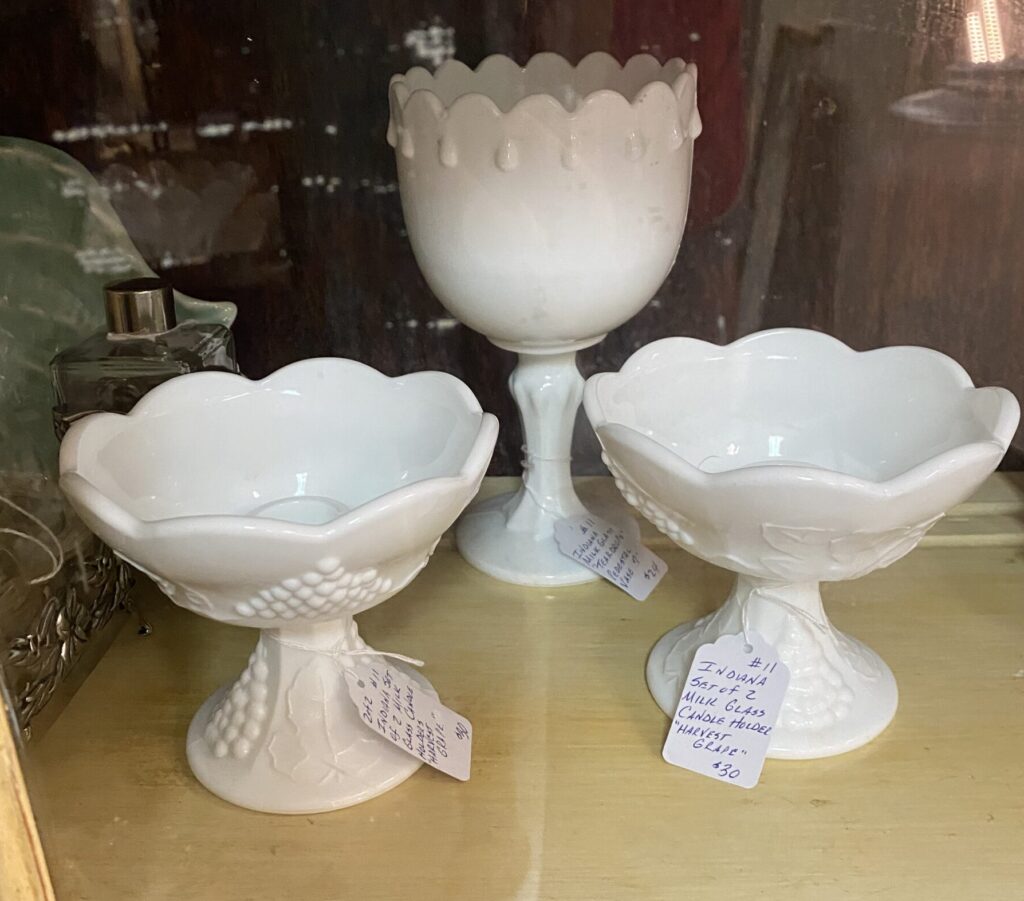
- Milk glass isn’t a modern invention — it traces back to Venetian glass furnaces in the 1500s, where it was made as a cheaper, more accessible alternative to imported Chinese porcelain.
- It’s defined by its opacity: vintage milk glass is opaque, which is the main thing that separates it from other collectible glassware like depression glass or carnival glass.
- Milk glass isn’t porcelain — porcelain is more translucent than milk glass, and it has a finer texture, even though both can look glossy white.
- Its American heyday was long, but not continuous: companies made milk glass from the late 1800s through the 1980s, but it actually fell out of style for decades starting in the 1930s.
- It’s not just white — look for blue, pink, yellow, brown, and even black milk glass beyond the classic creamy tone.
- Big-name makers to flag for viewers: Westmoreland Glass Company of Grapeville, PA operated from 1890 to 1985 and was one of the most prolific U.S. producers of fine milk glass, alongside Fenton.
- Authenticity tip for the “how to spot a real one” segment: check the underside for maker’s marks — Westmoreland pieces often carry a “WG” or a stylized “W” in a keystone, while pre-1970s Fenton pieces are typically unmarked. Also keep an eye out for heavier pieces and the more opaque the better.
- Good news for beginner collectors: while some rare pieces command high prices, much of vintage milk glass is still affordable, making it approachable for people just starting out.
- Best hunting grounds: antique stores, thrift stores, flea markets, and garage sales, plus specialist glassware dealers who can help verify age and origin.